A Deep Dive Into 3-Aminopropyl Triethoxysilane (APTES) Industrial Benefits
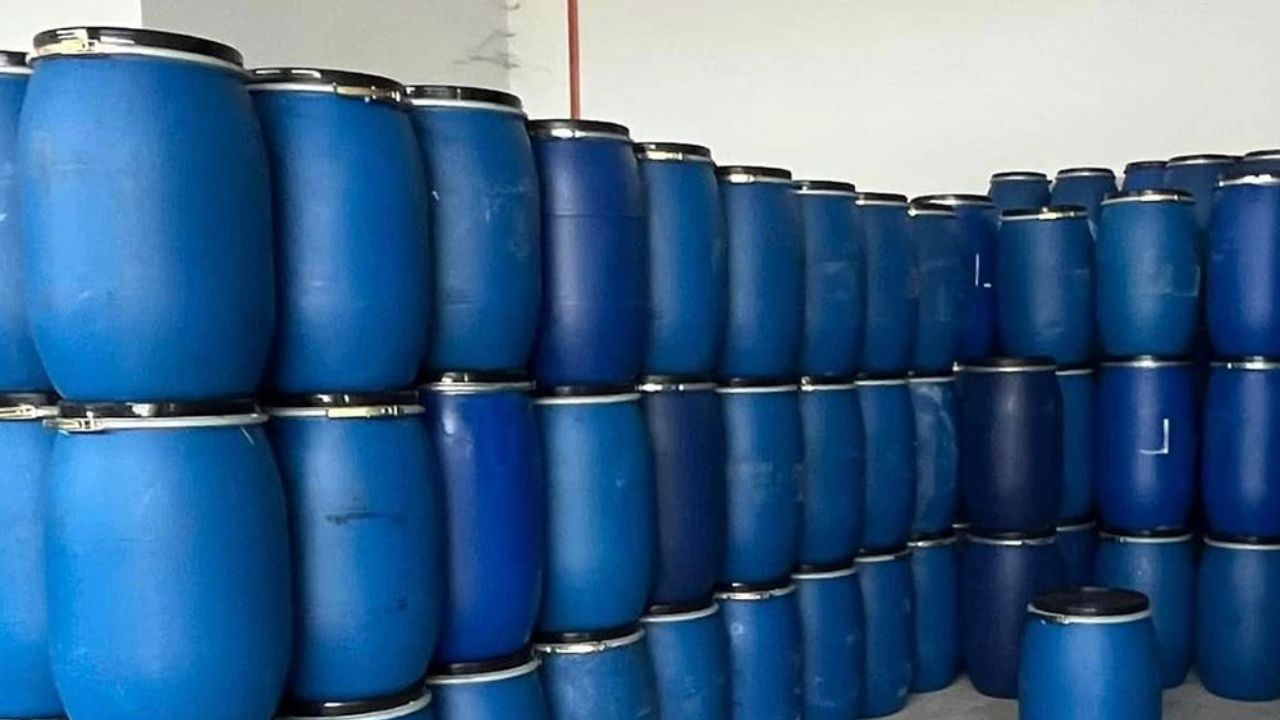
3-aminopropyl triethoxysilane, also referred to as aptes, is a well-known silane coupling agent that is appreciated due to its characteristic molecular architecture as well as its flexible functionality in the industrial sector. It has a reactive amino group and ethoxy groups that can be hydrolyzed, thus allowing chemical bonds between organic polymers and inorganic surfaces. The two-purpose arrangement is what renders APTES a crucial component of numerous fine materials. APTES will enhance performance with consistent performance that benefits various manufacturing processes by enhancing adhesion, improving compatibility, and strengthening composite structures.
Enhancing Adhesion Across Dissimilar Materials
Among the most significant advantages of APTES, it is possible to distinguish the possibility of significantly increasing the adhesion of surfaces that are inherently poor in compatibility. The amino group in APTES has a strong chemical bonding with organic substances, whereas the triethoxysilane groups react with inorganic substances. This bridging effect leads to better interfacial adhesion, and this is needed in a variety of coatings, adhesives, and sealants. Construction, automotive, and electronics Industries use APTES to guarantee the extended performance and enhanced structural integrity.
Improved Performance in Coatings, Adhesives, and Sealants
APTES is very instrumental in enhancing the performance of coating formulas and adhesive systems. Its existence increases the wetting ability of the coatings, enabling the evenness of their spread and their adhesiveness to surfaces. In the case of adhesive and sealant manufacturers, APTES enhances tackiness, which enables the materials to have high bonding strength even in hard environmental conditions. It also facilitates improved filler dispersion, which leads to less jagged textures and an improved overall performance. These benefits have seen APTES being the preferred product by manufacturers who want to add durability, resistance, and adhesion in their finished products.
Strengthening Composite Materials in Industrial Applications
APTES is very useful in composite materials, especially glass fiber reinforced composite materials. APTES was applied to glass fibers and enhances mechanical strength as well as moisture resistance. This is attributed to the fact that the coupling agent develops strong chemical bonds at the interface between fibers and resin matrices. This leads to stronger, more stable, and wear-resistant interfacial bonding of composites. The aerospace, automotive manufacturing, and wind energy industries are some of the industries that use these improved composite properties to satisfy the increasing requirements of lightweight materials that are very strong.
Enhancing Filler Dispersion in Resin Systems
Most resin systems, such as phenolic, epoxy, and polyurethane, need the addition of mineral fillers to enhance performance or cut down on the cost of production. Nevertheless, in the absence of a suitable coupling agent, fillers may agglomerate, or they may not blend well with the resin. APTES enhances the filling and dispensing of the fillers so as to end up with them being uniformly distributed throughout the resin matrix. This will result in more uniform materials, materials with improved mechanical performance, and longevity. Another reason manufacturers of molded parts, industrial coatings, and adhesives commonly select APTES is that it has the capability to optimize the behavior of fillers.
Applications in Casting and Abrasive Manufacturing
In addition to the pop coatings and composites, APTES has shown significant favor in casting and abrasive production. In coated sand casting, it also enhances the stability of sand cores and decreases the amount of gases that are generated during molding. This leads to increased accuracy of casting and minimized flaws in the completed metal parts. In abrasive product production, e.g., grinding wheels, APTES is used to increase bonding between the resin binder and the abrasive grains. The result of this enhanced bonding is increased tool durability, enhanced water resistance, and increased service life.
Sustainable and High-Performance Material Development
The other significant advantage of APTES is that it helps develop more sustainable high-performance material systems. Since the field of industry is turning to environmentally friendly production, the capability of APTES to improve the quality of water-based resins and low-VOC preparations is all the more prized. APTES enables manufacturers to maintain high-quality production and minimize reliance on solvent-intensive processes. This improves adhesion, mechanical strength, and filler compatibility in greener resin systems.
Conclusion
The 3-Aminopropyl Triethoxysilane has a broad industrial advantage that is enhanced by its distinctive chemistry. APTES has solutions suitable for the changing needs of modern manufacturing, whether in the level of adhesion or in the performance of coating, the reinforcement of composite materials, or the dispersion of fillers. Even as industries demand materials that can achieve efficiency, durability, and compatibility, APTES will continue to play a central role in facilitating technological breakthroughs in various industries. It is versatile to the extent that it will remain a pivotal component of the high-performance materials development.