Why Sheet Metal Parts with Correct Drawings Still Fail in Assembly
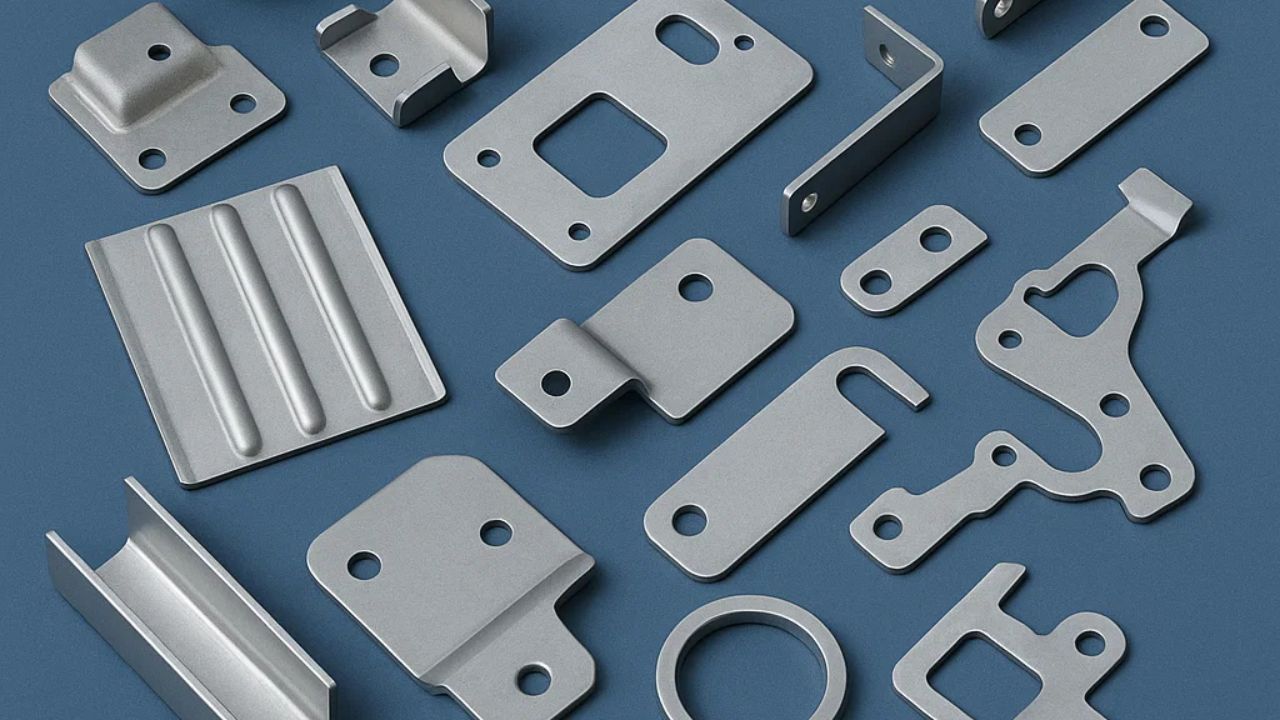
On sheet metal manufacturing floors, many workpieces appear to have no obvious issues with their angles or dimensions after bending. However, once assembly begins, problems such as misaligned holes, interference during flange bending, misalignment between edges, or deformation after welding often arise. Many drawings specify only nominal dimensions without establishing a unified datum system. Each process operates based on its own reference, causing errors to accumulate gradually until the parts can no longer be assembled.
These issues are often not caused by the equipment itself, but rather by a lack of effective coordination between flat pattern parameters, bending sequences, locating datums, and assembly requirements. This article will examine the relationship between flat pattern, bending, and assembly, analyze the most common sources of errors in on-site assembly, and discuss how to reduce rework rates.
Why “being able to be bent” does not equate to “being able to be assembled”
A single-step dimension being within specifications does not guarantee that the final assembly dimensions will be within specifications
Many workpiece issues manifest as follows: while the dimensions of a single side appear to be correct and the angles are within the specified range, cumulative errors grow larger after multiple consecutive bending operations. This leads to problems during final assembly, such as misaligned holes and uneven gaps between adjacent parts.
Assembly issues are often the result of “accumulated errors from earlier processes”
Many assembly issues are not caused by the final process, but rather result from the accumulation of errors from previous processes. Errors in flat pattern calculations, unreasonable bending sequences, inconsistent locating datums, and failure to allow for welding shrinkage in subsequent processes—all these factors contribute to the accumulation of errors.
Commonly overlooked issues in the flat pattern stage
Different materials, thicknesses, and bending methods affect flat pattern accuracy
When calculating the flat pattern, we must not rely solely on the theoretical values shown on drawings; instead, we must comprehensively consider material type, sheet thickness, inside radius, V-die opening, bending process, and actual springback. The theoretical values on drawings serve only as an empirical starting point; accurate flat pattern calculations must be based on validated material and process data.
In actual production, a flat pattern is typically not simply derived from empirical formulas but requires adjustments and verification based on bend allowance, bend deduction, the K-factor, or the factory’s validated bend table data. If these critical factors are ignored, even if the nominal dimensions on the drawing are correct, the actual dimensions or hole positions of the part after bending may deviate, leading to assembly difficulties or even making assembly impossible.
Hole positions, slots, clearance, and minimum flange length often determine whether subsequent bending can proceed smoothly
Poor upstream design decisions can also affect bending results. For example, holes located too close to the bend line are prone to stretching and deformation under stress; insufficient relief slots or bend-relief features at bend intersections can cause the corners to tear during bending; a minimum flange length that is too short prevents the formation of stable three-point contact; or insufficient clearance causing the workpiece to collide with the tooling. These are all subsequent bending issues caused by errors in the initial design.
If a flat pattern only considers “bending” and ignores “assembly,” rework is likely to occur later
Many assembly issues actually have their roots in the flat pattern stage. If the flat pattern drawing focuses solely on whether the part can be bent smoothly while ignoring subsequent assembly, connection methods, and aesthetic requirements, then even if the individual part is successfully bent, problems such as misaligned holes, uneven assembly surfaces, inconsistent joint gaps, more severe deformation after welding, or poor visual alignment may still arise during final assembly.
Therefore, the flat pattern stage must not focus solely on whether parts can be bent into shape. It must also verify that holes, locating surfaces, and flanges fit together properly, ensure adequate clearance is reserved for subsequent welding, riveting, or bolting, and guarantee that visible surfaces align correctly without being scratched or contaminated. Only by considering these three aspects—fit, connection, and appearance—during the flat pattern stage can subsequent rework be effectively minimized.
Why does the bending sequence directly affect the final result?
Different sequences lead to different interference issues and positioning difficulties
An incorrect bending sequence can easily cause interference in subsequent bending steps and make positioning difficult. For example, after a part is bent, the corresponding side stands upright, preventing the punch from entering or making it difficult for the part to seat stably against the back gauge in subsequent bends. Furthermore, for deep box-shaped parts, hemmed parts, narrow-slot parts, and U-shaped structural parts, an incorrect sequence forces operators to position the material in non-standard ways, amplifying errors.
Bending sequence also affects dimensional transfer paths
An incorrect bending sequence causes dimensional errors to accumulate step by step. The choice of which side to bend first establishes the reference for all subsequent edges. The bending sequence essentially determines the starting point of the dimensional reference. If the first bend does not begin at the critical functional reference edge but instead starts with an auxiliary edge that has no decisive role in assembly, cumulative deviations in positioning and dimensions are more likely to occur after multiple subsequent bends.
Assembly-oriented workpieces require advance planning of the sequence
For assembly-oriented workpieces such as enclosures, door panels, deep-cavity parts, and long-edge covers, the bending process must be simulated using 3D software during the process design phase, or checked via offline programming to ensure that the tooling, the press brake, back gauge, and previously bent flanges do not collide with one another. Once confirmed to be problem-free, on-site operations must strictly follow this verified sequence.
How should design, process planning, bending, welding, and assembly work together?
Define critical functional dimensions first, rather than treating all dimensions equally
During design and process planning, we must identify critical functional dimensions. Clearly distinguish which dimensions determine assembly, which affect appearance, and which only need to be roughly controlled.
Bending datums should align as closely as possible with assembly datums
One of the most common issues on the shop floor is inconsistency between design datums, bending locating datums, and assembly datums. For example, our design drawings may specify dimensions based on one edge, but during bending, a different edge is used for the back gauge, and during final assembly, a third edge is used as the measurement reference—resulting in assembly failure. Therefore, design datums, bending locating datums, and assembly datums should be aligned as closely as possible.
First article verification must include assembly verification
When conducting first article verification, it is not enough to simply measure the angles and edge lengths of a single part; one must also verify whether hole positions align accurately, whether mating parts can be installed, whether deviations will be magnified after welding, and whether appearance-sensitive parts will be damaged during subsequent processes. For parts involving the coordination of blanking, bending, and welding, first article verification must not only check whether the part can be bent and formed correctly but also ensure that the part can be smoothly installed and fit together during subsequent assembly. If readers wish to learn more about common classifications of related equipment in the sheet metal manufacturing process, RAYMAX sheet metal equipment can also serve as a reference for further reading.
Which workpieces are most prone to rework due to insufficient coordination?
Enclosure-type workpieces
These typically consist of multiple surfaces and multiple flanges, and often have requirements for hole positioning, door gap alignment, and diagonal dimensions. They are extremely sensitive to errors at the joints; even a slight misalignment can prevent a door panel from closing properly.
Multi-flange bracket-type workpieces
These are characterized by numerous holes and complex spatial relationships. If the flat pattern is inaccurate or the bending sequence is incorrect, it can easily result in misaligned holes or localized surface irregularities.
Long panels and exterior components
These are sensitive to both dimensional accuracy and surface quality. The longer the component, the more easily cumulative angular errors are magnified, leading to poor fit-up. For surface-sensitive parts, incorrect sequencing, improper material handling, or excessive flipping can also compromise surface quality.
Parts requiring subsequent welding or assembly
Since welding causes material shrinkage and deformation, these parts rely more heavily on the accuracy of the flat pattern and bending locating datums. Sufficient space must be reserved during the initial processing stages to accommodate subsequent welding; otherwise, the post-welding dimensions and shape will deviate significantly from the actual requirements, leading to assembly difficulties.
The key to reducing rework isn’t just about “bending more accurately”
Upstream design and downstream manufacturing must form a closed-loop feedback system
A high rework rate isn’t necessarily due to equipment precision; often, it stems from a lack of efficient collaboration between upstream design and downstream manufacturing. The correct process is: issues arise during first article verification → feedback is provided to process and design engineers → flat pattern parameters are corrected, and the bending sequence is standardized → updates are synchronized with personnel responsible for blanking and assembly.
Codify experience into rules, rather than leaving it in individual minds
To reduce rework, the key is to translate experience into standard parameters, standard process templates, clear checklists, and SOP process documents. Doing so not only reduces rework but also ensures stable, consistent results across different batches, shifts, and operators under the same conditions.
In summary, when sheet metal parts fail to assemble correctly despite having accurate dimensions on the drawings, the root cause lies in a lack of coordination between flat pattern parameters, bending sequences, locating datums, and assembly requirements, leading to the accumulation of errors. By establishing a unified datum system, determining an appropriate bending sequence, and conducting comprehensive first article verification, rework rates can be effectively reduced, ensuring a smooth assembly process.
Assembly Failure Review Checklist
When sheet metal parts fail in assembly even though the drawings look correct, the problem usually comes from the gap between design intent and manufacturing reality. A drawing can define nominal dimensions, but it may not fully capture tolerance stack-up, bend allowance assumptions, forming sequence, coating thickness, or fixture constraints.
A practical review should check these points before blaming the drawing or the operator:
- Confirm whether the bend radius, K-factor, and flat pattern were calculated using the same tooling that production actually used.
- Check whether hole locations are measured before or after bending, because bending can shift features near the bend line.
- Review tolerance stack-up across mating parts instead of checking each part in isolation.
- Inspect coating, welding, hardware insertion, and finishing steps that may add thickness or distortion.
- Compare the assembly fixture with the CAD datum scheme to see whether the part is being constrained differently.
Many assembly issues are not caused by one large error. They are caused by several small differences that accumulate until the final part no longer fits.
Why Correct Drawings Still Need Manufacturing Feedback
Engineering drawings should be treated as a starting point for controlled production, not the final proof that a part will assemble smoothly. Feedback from press brake operators, welding teams, inspection staff, and assembly workers can reveal problems that are invisible in CAD.
For example, a flange may meet the stated tolerance but still block a fastener because of bend springback. A slot may be dimensionally correct but hard to align because the mating part has its own tolerance variation. These problems require design-for-manufacturing review, not just tighter inspection.
Practical Improvement Steps
The most effective fix is to create a closed feedback loop. After the first article inspection, record which dimensions caused assembly adjustment, which bends needed correction, and which features were difficult to inspect. That information should be added to the drawing notes, flat pattern rules, or process sheet before the next batch.